
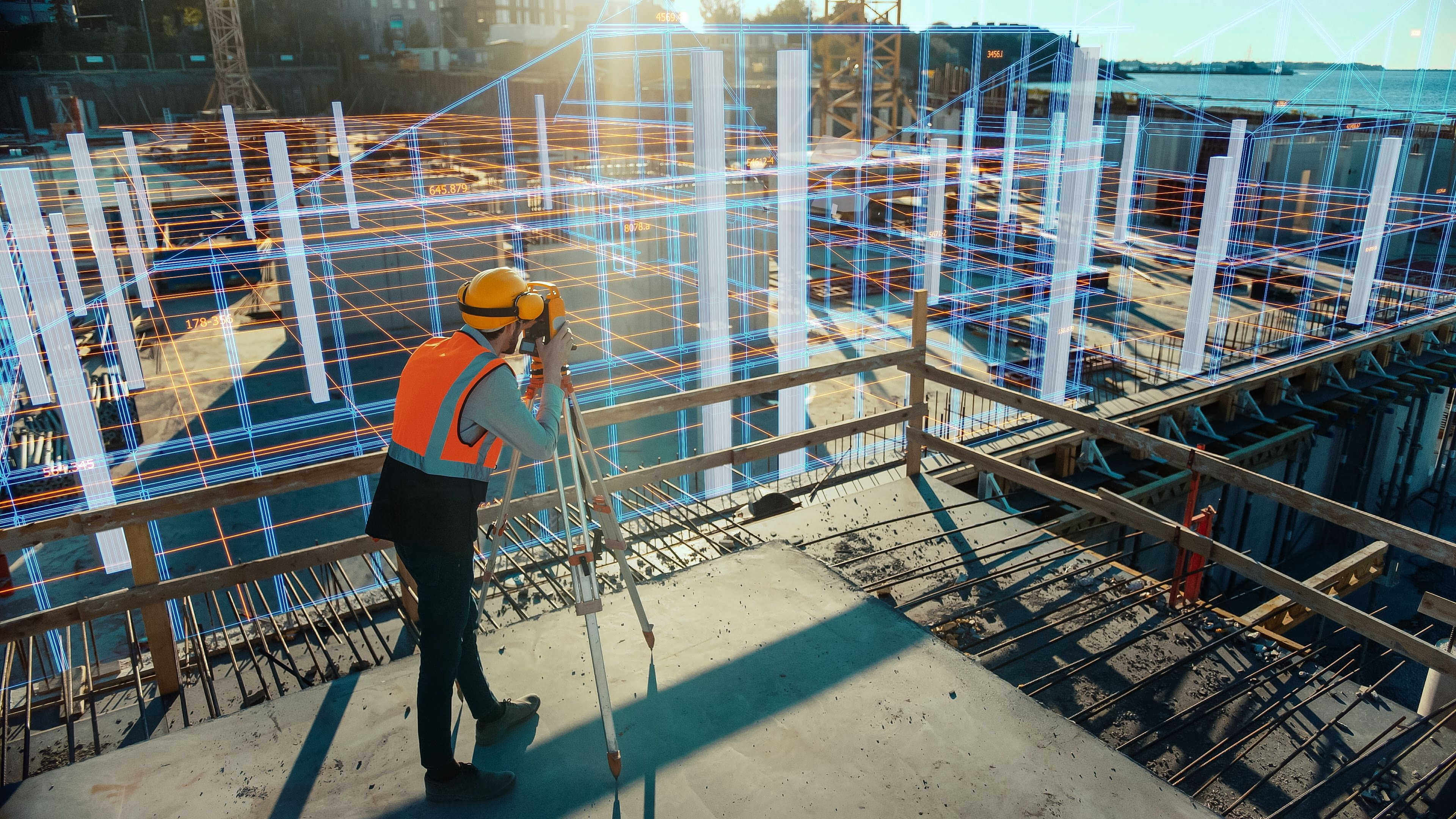
The industrial AI reckoning has finally arrived
Construction and manufacturing — the two largest sectors of the physical economy, worth a combined 20+ trillion dollars in annual output — are converging on the same conclusion in 2025. Point solutions have failed, and unified AI-powered operating systems are now delivering measurable bottom-line results that decades of digital transformation could not.
The evidence is concrete: Foxconn's Ingrasys lighthouse cut defect rates to 97%. Suffolk Construction reduced its recordable incident rate roughly 70% over five years. BMW slashed paint-line simulation from 12 weeks down to one. Procore's customers run 40% more construction volume per worker. Yet the same period produced MIT's now-famous finding that 95% of enterprise generative AI pilots deliver zero measurable business impact — a paradox that defines the moment we're in.
The winners aren't the firms buying more tools. They're the firms consolidating onto integrated platforms that turn fragmented operational data into a system of intelligence. This article explains what's real, what's hype, and what business owners should actually do.
The status quo is quantifiably broken
Construction productivity has grown roughly 0.4% per year since 2000, one-fifth the pace of the broader economy and one-seventh the pace of manufacturing, according to McKinsey Global Institute. In advanced economies the trend is worse. U.S. construction productivity has declined at roughly 2% per year.
McKinsey's canonical megaproject benchmark is this: 98% of projects experience cost overruns or delays, with overruns averaging 80% of budget and schedules slipping 20 months. This was reaffirmed by a 2023 study of 500+ projects showing 79% cost overruns and 52% schedule delays. FMI Corporation calculates that rework, miscommunication, and bad data cost the U.S. construction industry roughly 177 billion dollars annually, with rework alone consuming 5–12% of project value.
Manufacturing's pain looks different but costs the same. Siemens' 2024 True Cost of Downtime report, conducted with Senseye, found Fortune Global 500 manufacturers lose 1.4 trillion dollars annually to unplanned downtime — that's 11% of total revenue, up from 864 billion dollars five years earlier. An idle automotive line burns roughly 2.3 million dollars per hour. Average plant overall equipment effectiveness sits at 60% against a world-class benchmark of 85%, and only about 6% of manufacturers achieve that world-class level per Evocon's multi-country dataset. Quality costs another 10–30% of revenue in poor-quality terms, and U.S. product recalls hit a six-year high in 2024 with 2,454 events tracked by Sedgwick.
Both sectors face the same workforce cliff. Associated Builders and Contractors said construction needed 454,000 additional workers in 2025 beyond normal hiring, and 92% of contractors reported difficulty filling positions in the AGC/NCCER 2025 workforce survey. Deloitte and the Manufacturing Institute project 2.1 million unfilled U.S. manufacturing jobs by 2030, equivalent to a 1 trillion dollar economic hit. The median manufacturing worker is 44 years old, and 26% of the workforce is 55 or older.
Safety remains stubborn as well. 1,069 construction workers died on the job in 2024 per BLS, a fatality rate roughly twice the all-industry average, with falls, struck-by impacts, electrocution, and caught-in incidents — the OSHA fatal four — causing 59% of those deaths.
The structural problem underneath all of this is data fragmentation. The average contractor runs 5–7 disconnected software systems for estimating and project workflows. Balfour Beatty's preconstruction team had eleven tools before consolidating onto Beck Technology's DESTINI platform. Only 26% of contractors rate their data quality as high in the December 2025 Dodge/CMiC AI survey.
Manufacturing is no better. Deloitte's 2025 Smart Manufacturing study found only 29% of manufacturers run AI and machine learning at scale and just 24% run generative AI at scale, while 91% reported at least one cybersecurity breach in the prior year. Most factories still cannot trace a single root cause across ERP, MES, and SCADA systems without manual reconciliation.
What AI is actually doing on construction sites
The most credible construction AI deployments cluster around four use cases with documented results.
Computer-vision progress tracking — pioneered by Buildots, Doxel, and OpenSpace — turns weekly walkthroughs into objective data. Doxel's deployment with Mortenson on a Kaiser Permanente medical office building documented a 38% increase in labor productivity and an 11% under-budget delivery. Buildots' work with Per Aarsleff, Denmark's largest contractor, identified scheduling conflicts that would have triggered late-delivery penalties of 0.1% of contract value per day. OpenSpace's RG Construction case study moved a project initially tracking 20% over budget to 10–15% under budget.
Generative scheduling is the next layer. ALICE Technologies, which formalized an alliance with McKinsey in April 2025 and now runs at 35+ enterprise clients, simulates millions of schedule scenarios from BIM and Primavera data and reports average client outcomes of 17% project-duration reduction, 14% labor savings, and 12% equipment savings. ALICE saved Suffolk Construction 42 days on a life-sciences project and helped a McKinsey hyperscaler client compress a data-center program 40%. nPlan, trained on more than 750,000 historical schedules representing 2 trillion dollars of capital spend, runs on HS2, Sizewell C, and the 10.7 billion pound TransPennine Route Upgrade and reports 1.2 billion dollars in customer savings to date across 500 billion dollars of live projects.
Safety AI has produced some of the most defensible results in the industry. Suffolk Construction's deployment of Newmetrix (formerly Smartvid.io) and follow-on programs cut its recordable incident rate roughly 70% over five years and lost-time incidents 35%, according to its chief data officer in Engineering News-Record. The Boldt Company reported a 10% incident reduction and a 75% drop in workers' compensation insurance rates. A Zurich-Arrowsight camera-and-coaching pilot at Suffolk delivered a 50% reduction in workers' comp claim frequency.
Equipment intelligence sits across the OEM layer. Caterpillar's Cat AI Assistant connects 1.5 million assets globally. One-third of its connected fleet now has a digital twin, and customers report up to 30% reductions in unplanned downtime and roughly 20% maintenance cost savings.
Turner Construction's enterprise partnership with OpenAI, announced in 2025, gave every employee ChatGPT Enterprise plus Microsoft Copilot and now operates 400+ in-house AI agents. These include Safety Scout for hazard photo analysis, a Schedule Insight Agent for critical-path automation, and an automated trade-contract drafting tool for the roughly 30,000 contracts Turner issues annually. These aren't just concepts — they're running in production at one of the largest general contractors in North America.
How manufacturing is rewiring itself
The World Economic Forum's Global Lighthouse Network now contains 201 sites across 30+ countries, up from 16 at the program's launch. The 2025 cohort delivered an average 40% labor productivity gain, 48% lead-time reduction, 41% defect decrease, and 28% energy reduction, with AI or generative AI enabling roughly half of all top use cases.
Crucially, recent cohorts are reaching ROI in 10–20 months — 25–50% faster than earlier cohorts — which directly contradicts the conventional skepticism that industrial AI takes too long to pay back.
Specific Lighthouse outcomes are instructive. Foxconn's Ingrasys NanChing facility, the world's first AI-server lighthouse, delivered a 73% production-efficiency gain, 97% defect reduction, 21% shorter lead times, and 39% lower per-unit cost. Foxconn Chengdu cut manual inspection 92% and lifted OEE by 17 points. Schneider Electric's Le Vaudreuil sustainability lighthouse achieved 25% energy reduction, 64% water reduction, and net-zero Scope 1 and 2 emissions in 2025. AstraZeneca's Södertälje site reduced development lead times 67% with active pharmaceutical ingredient use down 75% in experiments.
Predictive maintenance, the oldest industrial AI use case, has matured into routine return on investment. Colgate-Palmolive's Augury deployment at its Morristown plant prevented two failures in three months that would have cost 60,000 dollars in downtime. A single tube-maker intervention saved 192 hours of production and 2.8 million tubes of toothpaste output. ArcelorMittal's proprietary Sentinel platform achieved a 100% pilot success rate predicting motor and hydraulic failures with 15-day average advance warning. Tata Steel runs 260+ AI algorithms and reports a 20% reduction in unplanned downtime. Procter and Gamble's Pusula.ai deployment forecasts more than 80% of equipment faults six to eight hours in advance, saving roughly 1.4 million dollars per production line per year.
Computer-vision quality control has eliminated the inspector bottleneck. BMW's vision systems documented a 37% defect reduction, and the company can reprogram AI inspection in 48 hours versus six to eight weeks for traditional rule-based machine vision. Heineken reports 92% inspection accuracy and a 35% drop in packaging defects. Siemens' Amberg electronics plant runs at 99.99885% quality with 350 changeovers per day on a 75% automated value chain — a benchmark that took 35 years to build but is now being replicated through Siemens Industrial Copilot, deployed with Microsoft Azure OpenAI at 100+ companies including Schaeffler and thyssenkrupp.
Supply-chain AI has finally moved past forecasting demos. Unilever's Sky CPFR program with Walmart Mexico runs a neural network performing 12.5 billion computations daily across 3.1 million forecast combinations and replenishes 20 million cases. Results: 98% on-shelf availability, 98% fill rate, and 12% sales growth in under a year. Unilever's broader demand-sensing platform reduced forecast error 30% and saves roughly 300 million dollars in annual holding costs.
The pilot purgatory problem and why operating systems matter
Here's where the credible analysis has to diverge from the vendor narrative.
MIT's NANDA Initiative documented in 2025 that 95% of enterprise generative AI pilots fail to deliver measurable financial returns, with 30–40 billion dollars of enterprise AI spending stuck in proof-of-concept limbo. IDC reports that for every 33 AI pilots launched, only four reach production. Gartner forecasts that 30% of generative AI POCs will be abandoned by the end of 2025 and more than 40% of agentic AI projects will be cancelled by the end of 2027. PwC's 29th Global CEO Survey of 4,454 executives found 56% of CEOs report no revenue or cost benefit yet from AI.
The diagnosis from McKinsey, BCG, and Deloitte is consistent: failed pilots overweight algorithms and underweight everything else. BCG codified this as the 10-20-70 principle — 10% algorithms, 20% data and technology infrastructure, 70% people, processes, and culture.
Their 2025 Build for the Future study of 1,250 companies found only 5% generate significant value at scale, and those leaders capture 1.5 times higher revenue growth and 1.6 times greater shareholder returns. They also spend 64% more of their IT budget on AI than laggards.
This is the structural argument for AI-powered operating systems rather than point solutions. The pattern shows up across both sectors.
In construction, Procore now runs 3+ million projects across 150+ countries. In October 2025 it launched Procore Helix, an AI intelligence layer built directly into the platform, plus Agent Builder for natural-language agent creation. In January 2026 Procore acquired Datagrid, a vertical agentic-AI company, explicitly to turn fragmented data into a powerful system of intelligence by connecting third-party ERPs, cloud storage, and document repositories. Autodesk Forma cut site-design tasks at Baker Barrios from 40 hours to 4 hours and announced its first AEC foundation model, Neural CAD for Buildings, in 2025.
In manufacturing, Palantir Foundry now runs at Airbus, BP, Ferrari, Boeing Defense, Rio Tinto, and Merck KGaA. The U.S. Army's July 2025 Enterprise Service Agreement consolidated 75 separate data and software contracts into a single 10 billion dollar, 10-year Palantir agreement — the most explicit unified OS deal in industrial AI. Cognite Data Fusion runs Aker BP and a Saudi Aramco joint venture. C3.ai's Baker Hughes JV has generated more than 500 million dollars in oil and gas revenue and was extended through June 2028. Tulip Interfaces is deployed across all Stanley Black and Decker global factories and reports 75% reductions in logbook review time at pharma customers.
McKinsey's 2025 State of AI found 88% of organizations now regularly use AI in at least one function and 72% use generative AI, but only 6% of respondents qualify as AI high performers — those attributing more than 5% of EBIT to AI. High performers are three times more likely to have scaled agentic AI enterprise-wide and five times more likely to be making big bets, with more than a third spending over 20% of digital budgets on AI. The gap between the 6% and the rest is not algorithmic. It is architectural.
Adoption is racing, but capability is uneven
The 2025 adoption data tells a two-track story. AGC's 2025 survey found 61% of construction firms now use AI or plan to increase investment, up from 44% the prior year. The Dodge/CMiC December 2025 brief found 87% of contractors believe AI will meaningfully transform their business — but only 19% have actually adapted workflows and just 40% have a dedicated AI budget. The RICS 2025 AI in Construction Survey of 2,200+ professionals was blunter: 45% of organizations have no AI implementation, 74% have minimal or no AI capability, and fewer than 1% use AI organization-wide.
Manufacturing is further along but uneven. Deloitte's 2025 Smart Manufacturing survey of 600 executives showed 92% view smart manufacturing as the primary driver of competitiveness in the next three years, with 80% planning to invest 20%+ of improvement budgets there. PwC's 2026 industrial outlook found 86% of high-growth manufacturers are investing in AI and automation, but 54% have low or very low confidence in frontline leadership readiness to lead AI-driven change. BCG's AI at Work 2025 survey of 10,600 workers identified a silicon ceiling: 72% of workers overall use AI regularly, but only 51% of frontline employees do.
Capital is moving faster than capability. Construction-tech VC hit 3.7 billion dollars through Q3 2025, more than double the prior year, with AI-specific deals capturing roughly two-thirds of that flow per Nymbl Ventures' Q3 report. IDC forecasts worldwide AI-supporting tech spending of 307 billion dollars in 2025, doubling to 632 billion dollars by 2028. The AI-in-manufacturing market alone is projected to reach 155 billion dollars by 2030 at a 35% compound annual growth rate per MarketsandMarkets. NVIDIA's collaboration with Foxconn — including a 10,000-Blackwell-GPU AI Factory in Taiwan announced at Computex 2025 — and Microsoft's Industrial Copilot rollout to 120,000+ Siemens TIA Portal users define the upper edge of investment intensity.
What separates the winners
The winners are not necessarily the most technologically sophisticated firms. They are the firms that treat AI as an operating-system overhaul rather than a portfolio of pilots. Three traits distinguish them in the data.
First, they consolidate before they automate. Balfour Beatty cut from 11 preconstruction tools to one. The U.S. Army cut from 75 contracts to one Palantir agreement. Procore's Helix launch and Datagrid acquisition are explicitly about eliminating the integration tax.
Second, they embed AI into core workflows, not adjacent ones. Turner's 400+ agents target the work people actually do — RFIs, contracts, schedules, hazard reviews. Schneider Electric Le Vaudreuil's 25% energy reduction came from AI plumbed into operations, not bolted on.
Third, they invest in the 70%. BCG's data shows leaders allocate substantially more to people, process redesign, and change management than laggards, who over-invest in models and under-invest in adoption.
The numbers reinforce the thesis. WEF Lighthouses average 50%+ productivity gains, 80%+ defect reductions, and 30% CO₂ reductions. McKinsey estimates digital transformation in construction alone could yield 14–15% productivity gains and 4–6% cost reductions, against an industry backdrop where global construction spend is forecast to grow from 13 trillion dollars in 2023 to 22 trillion dollars by 2040. McKinsey warns that output could fall 40 trillion dollars short of demand by 2040 without productivity recovery. The opportunity cost of inaction is becoming larger than the cost of action.
Conclusion: the next two years will sort the field
The honest read of the 2024–2026 evidence is straightforward. AI is producing real, repeatable, double-digit operational improvements wherever it is deployed inside a unified data and workflow architecture, and producing essentially nothing wherever it is deployed as standalone tools. The fence between those two outcomes is the operating system.
Construction firms that consolidate onto a system of record extended into a system of intelligence — Procore, Autodesk Construction Cloud, or comparable platforms — and that train their teams to use embedded AI for RFIs, scheduling, safety, and progress tracking are pulling ahead.
Manufacturers that wire MES, ERP, and SCADA into platforms like Foundry, Cognite, Tulip, or Industrial Copilot and then deploy predictive maintenance, vision-based quality, and generative scheduling on top are the ones populating the Lighthouse Network.
For business owners and decision-makers, the practical implication is straightforward. The question is no longer whether AI works in heavy industry. Foxconn's 97% defect reduction, Suffolk's roughly 70% TRIR drop, Unilever's 300 million dollar annual savings, and Siemens Amberg's 99.99885% quality rate settle that.
The real question is whether you will be one of the roughly 6% of firms that capture the value or one of the roughly 95% whose pilots quietly die. The differentiator in 2026 is not access to models. It is willingness to rebuild the operating layer underneath the work itself.